Search This Blog

Showing posts with label politics. Show all posts

Sunday, May 23, 2010

Mobile companies and their analogous countries

Sometimes when a problem is too big or too abstract to grasp, we tend to equate it to something we can grasp better. We call it an analogy. Dictionary.com gives this definition:
A similarity between like features of two things, on which a comparison may be based: the analogy between the heart and a pump.
There is also a different application to an analogy. You can use it to compare a new concept to a mature concept to get a sense of how the new idea might mature in future. While this of course is not perfect, it is a reasonable approximation.

Recently, I came across an article in Engadget called Is Android fragmented or is this the new rate of innovation?

The article led me to think beyond just Android and more about the mobile market in general, and even the companies that are responsible for the primary mobile platforms. I saw some interesting similarities between these platforms and how they are modeled and some of the leading countries in the world and how they operate. I felt it was a reasonable assumption as, after all, we are seeing the mobile platform spawn the world effortlessly. So, here's my analogy of the mobile platforms (and the companies) to some of the countries of the world.

iPhone / Apple : China
The first one of course, is the most popular mobile platform at the moment, the iPhone. 


The success of iPhone as come about due to the following factors.
  • Hundreds of applications at a relatively cheap price point
  • One single platform and phone model (with minor variations)
  • Tight grip over the user and developer base
  • Tight control / censorship over how information is disseminated over its platform
While you might argue that its design innovation is what made it the leader in the space, I would argue that the factors above are what has made it sustainable beyond the initial shock and awe. As you can see, the tenets are not too dissimilar from how China operates as well.

While China is the envy of the world and is fast gaining economic power, there is also resentment about the practices it has used to get there. The point of this blog is not to argue whether such practices are ethical or not - it is up to the larger population to figure out. Rather, to me, what is striking is the similarity in itself.

Interestingly, like China, while people grudgingly complain about the non-openness of the platform and authoritarian practices, they nevertheless go ahead and buy iPhones. 

Android / Google : USA
Google is fast becoming a major competitor in the mobile space. Already a world leader in the search space, the Android OS has positioned Google well to compete in the mobile area, which to Google, is another feed for its search domination.


Android (and hence, Google) has the following features.
  • It is based on a 'relatively' open platform 
  • Everyone is welcome to develop in the modified Java system, but the platform retains control over its future
  • It has an 'open' market although with a slant towards it's own powers (search)
  • It attempts to corral the rest of the industry towards standardization
  • The company promises to do 'no evil' (but may not be acting on it or perceived to be acting on it)
A lot of the fundamental principles to me seem to resonate with how the US Government operates. While in general, it tries to do more good than harm, there is general skepticism that it maybe doing it the other way around. People are cautiously optimistic about the new platform.

RIM / Blackberry : Canada
Research In Motion's Blackberry OS has become the de facto standard in business mobile usage. In that aspect, maybe it is not that similar to Canada, however there do seem to be some similarities.
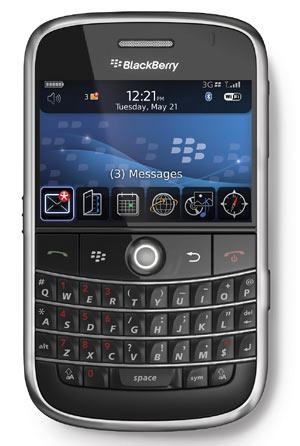

  • The platform is loosely based on a more standardized platform (J2ME)
  • Even though the platform is quite open, it is still not as popular as it was expected to be
  • It is happy to be in its own space, without trying to influence others
I am always surprised at how the platform has really not tried to expand to other markets, even after other players such as iPhone have come in and at the same time also maintain its hold on what it does best. May be they follow the words of  Jim Collins in his book Good to Great to the dot, which is not to say that it's a bad thing.

Microsoft / Windows Mobile : European Union
The article I had mentioned earlier differentiates Windows and Android in the way they see the device and software partners. Since the beginning, Microsoft has always thrived on a license-and-partner relationship, which has worked to its advantage over the years.


Windows Platform has the following characteristics.
  • It works on a partnership model. Everyone pays a license to develop on the platform
  • The platform heeds to the needs of the partners and waits till everyone is on board
  • The overall fee structure is more expensive compared to other similar platforms
  • Change is hard to make and it takes a while to happen as well
It's also ironic that Windows platform is similar to EU, given its recent problems with EU! However, the partner model (and problems thereof) does seem to resonate well.

Oracle / J2ME : India
Finally, we have the Operating System that most platforms other than those mentioned above, are based on - the Java Micro Edition. I would potentially put Symbian in the same category as well.


Let us look at the defining characteristics and the similarities.
  • It's the most open platform compared to all others
  • It tries to please everyone and sometimes ends up pleasing no one
  • By trying to find a common minimum that will satisfy all devices, it tends to fall short of user expectations, leading users to create their own variant platforms
  • Being a 'democratic' system, it has little control over the devices where it is used, leading to significant fragmentation, which in turn, compounds the problem of trying to find a common minimum.
  • Even though it is a credible and viable platform, it is outdated and is fast losing its market relevance
To me, the J2ME platform's similarity to India is probably as striking as Apple's similarity to China. Interestingly enough, while both are hailed as leaders in their own way (largest democracy vs economic super power), they have their own differences.

While it may take a while for the countries to play out their roles, may be it will be interesting to see how the market reaction is to these mobile platforms, which in turn, may give a good indication of how the world will shape up - and I am not sure if the results we may see in future is something we may like to see ;)

Friday, August 14, 2009

Hybrid Government

Here's an open-source idea that I am more than willing to donate to anyone who wants to implement it.

Of late there has been a lot of interest in renewable energy sources, more due to the sudden spike in gas (or petrol, as it's called in India), than due to any major concern about the environment.

Coming from India, pollution has been a part and parcel of my life, and so was fresh, clean air when I was young. When I went back to India from US for the first time (after 3 years), Bangalore and Madras suddenly seemed way more polluted and Bangalore more than Madras. I guess it's probably due to the sudden IT boom, resulting in elevating a number of folks to the upper-middle class sector, and consequently increasing their spending on vehicles that consume gas.

While politicians wax eloquently about how citizens should mind their carbon footprint and help the world, they seem to have ignored a carbon giant that they can control - the mass transit system (which includes taxis and buses).

To me, a citizen-based carbon-footprint is good, but is not necessarily the best solution for the following reasons:
  1. Normal usage of personal transportation is much smaller in a day compared to a mass transit system, which typically runs for almost the whole day.
  2. People tend to take better care of their own vehicles, such as constant maintenance, better gas mileage, etc. while the care is relatively less for a government-owned vehicle.
  3. People, while they tend to travel mostly near their locality, occasionally take a longer trip that needs more speed and significant refueling.
  4. Not all individuals can afford the relatively higher costs of owning a hybrid vehicle (at least not now)
On the other hand, a government-owned, sponsored, or subsidized mass transit system is a more controllable entity that can do with a lot of improvement.

I would argue that you can save quite a bit of the environment if the taxis in New York or the autos (kind-of like 3-wheeler coupes in India) are fitted with a hybrid engine, as they satisfy all the criteria above.

If you want to start a company, here's an idea: Create a hybrid engine that can be easily retro-fitted to existing taxis or autos at a reasonably affordable price. The resultant product can potentially be sold to multiple cities and hence can generate a reasonable revenue stream. If the government can be convinced, then you can always hope for some subsidy and even a portion of the initial investment - provided the government is interested and willing. Probably there-in lies the key.

Saturday, July 25, 2009

A head nod to Indexed

A few months back, I was looking at books on visual thinking, inspired by Garr Reynolds' Presentation Zen and Dan Roam's Back of the Napkin and came across Jessica Hagy's Indexed.

At that time, while I found the book to be fairly intriguing, I didn't find it directly applicable to what I was looking for, as it did not have any instructions on how to be a visual thinker. Nevertheless, I put her blog in my Google Reader.

After having had a good background on visual thinking, thanks to the books I mentioned above, I look back and see the subtlety and depth in Hagy's diagrams. I am amazed by the level of creativity she has and the seemingly effortless way in which she can portray complex concepts in a simple x-y chart or a Venn diagram.

I thought I might as well make an attempt in creating such an index myself and here are a couple that I could think of.


I have been having interesting discussions with my Dad about religion and spirituality. He has his strong views, him being a devout religious person, and I, mine, trying to find a balance. While I won't call my diagram accurate, as the topic tends to be subjective in nature, I could see how creating a simple diagram can at least make thoughts a lot clearer and much more easy to understand. No wonder they said that a picture is worth a thousand words! It truly is.